

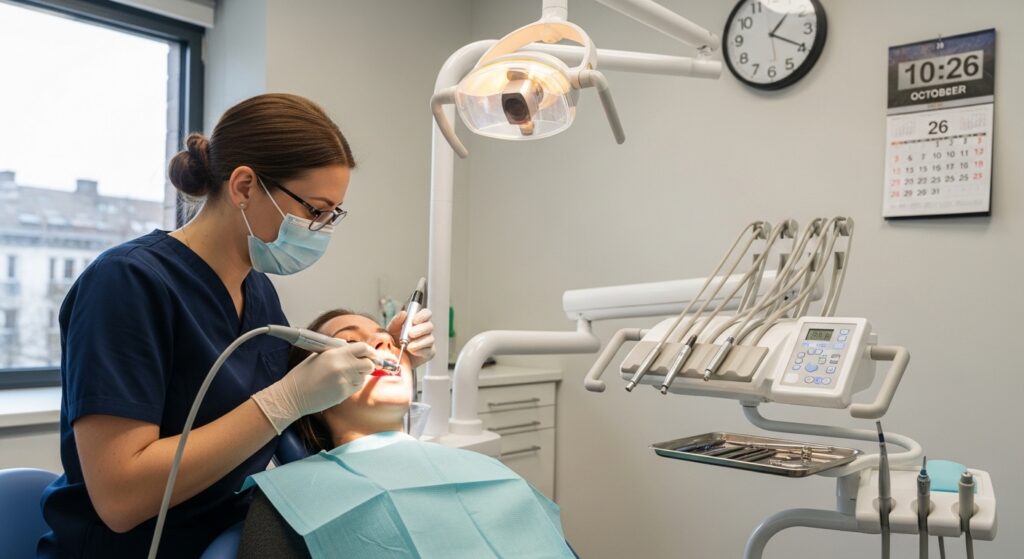
How Long Does a Clean at the Dentist Take? Australian Dental Visit Timeline Explained
How Long Does a Clean at the Dentist Take?
How long does a clean at the dentist take? In Australia, a routine dental cleaning usually takes between 30 and 60 minutes. For patients with healthy gums and minimal tartar buildup, appointments are typically closer to 30 to 40 minutes. If gum inflammation, heavy calculus deposits, or periodontal disease are present, cleaning can take 60 minutes or longer, and in some cases may require multiple visits.
At Redcliffe Dental in Redcliffe, QLD, we assess each patient individually before recommending a treatment timeline. In this guide, we explain the average dentist cleaning time in Australia, what happens during a clean dental appointment, which stages take the longest, how gum disease changes the appointment length, and what you can expect during your visit.
Quick Answers
How long does a dentist’s clean take on average?
Most routine dental cleaning appointments in Australia take 30 to 60 minutes. A standard check-up and clean for a low-risk adult is often around 40 minutes.
Can a dentist clean take less than 30 minutes?
Yes, in patients with excellent oral hygiene and minimal tartar. However, under 30 minutes is uncommon for adults because scaling requires adequate time.
Does having gum disease make the cleaning take longer?
Yes. Gum disease often requires deeper scaling below the gumline. This can extend treatment to 60 to 90 minutes or multiple appointments.
What part of the appointment takes the most time?
Scaling, which involves removing hardened tartar deposits above and below the gumline, is the longest stage.
Is polishing included in a dental clean?
Yes. Polishing is typically included in a routine clean unless clinical reasons require modification.
What Is a Clean Dental Appointment?
A clean dental appointment, often called a scale and clean, is a preventive treatment designed to remove plaque, calculus, and surface stains that cannot be removed through brushing alone.
At Redcliffe Dental, most patients book a combined visit through our regular dental examination service, which includes both a clinical assessment and professional cleaning.
A routine appointment generally includes:
- Medical history update
- Full oral examination
- Periodontal assessment
- X-rays if required
- Ultrasonic scaling
- Hand scaling refinement
- Polishing
- Fluoride application if indicated
The exact routine dental cleaning time depends on your current oral health.
Average Dentist Cleaning Time in Australia
Typical Appointment Length by Oral Health Status
| Patient Type | Average Dentist Cleaning Time |
| Excellent oral health | 30–40 minutes |
| Mild tartar buildup | 40–50 minutes |
| Moderate buildup | 45–60 minutes |
| Early gum disease | 60 minutes |
| Moderate to advanced gum disease | 60–90+ minutes |
For most adults attending six-monthly appointments, the average dentist cleaning time is around 40 to 50 minutes.
Step-by-Step: What Happens During the Appointment?
Understanding the breakdown explains why appointment length varies.
1. Medical History and Risk Review – 5 Minutes
We update:
- Medications
- Systemic health conditions
- Smoking status
- Pregnancy
- Previous dental concerns
Medical conditions such as diabetes can influence gum health and therefore cleaning time.
2. Comprehensive Oral Examination – 5 to 10 Minutes
The dentist assesses:
- Tooth decay
- Existing restorations
- Fractures
- Bite alignment
- Oral cancer screening
- Gum health
If X-rays are needed, this may add 5 to 10 minutes.
3. Periodontal Assessment – 5 Minutes
We measure gum pocket depths and bleeding points.
Healthy gums usually show pocket depths of 1 to 3 mm.
Deeper pockets may indicate periodontal disease and extend cleaning time.
4. Scaling – 15 to 30 Minutes (Longest Stage)
Scaling is the most time-intensive component.
It involves removing:
- Hardened calculus above the gumline
- Subgingival calculus below the gumline
- Plaque deposits between teeth
Ultrasonic instruments break down larger deposits, while hand scalers refine detail areas.
Patients who attend regularly typically require less scaling time.
Our preventive approach through oral hygiene services helps minimise long-term treatment duration.
5. Polishing – 5 to 10 Minutes
Polishing smooths enamel surfaces and removes surface staining.
It improves:
- Aesthetic appearance
- Comfort
- Plaque resistance
Polishing is usually included in a clean dental appointment.
6. Fluoride Treatment – 2 to 5 Minutes
Fluoride may be applied to strengthen enamel and reduce decay risk.
Not all adults require fluoride at every visit.
What Makes a Dental Cleaning Take Longer?
1. Gum Disease
Gum disease significantly increases dentist appointment length.
There are two broad categories:
Gingivitis
- Reversible
- Inflamed, bleeding gums
- May add 10–15 minutes
Periodontitis
- Involves bone loss
- Requires deep scaling
- May require 60–90 minutes or staged appointments
According to the Australian Dental Association, periodontal disease requires thorough subgingival cleaning to prevent progression: https://ada.org.au/
2. Time Since Last Clean
Patients who delay visits for several years often accumulate heavy calculus, increasing routine dental cleaning time substantially.
3. Smoking
Smoking accelerates tartar formation and gum inflammation.
4. Orthodontic Appliances
Braces, retainers, or aligners can increase plaque retention and extend cleaning time.
5. Anxiety or Sensitivity
Patients requiring:
- Slower pacing
- Local anaesthetic
- Frequent breaks
may require extended appointment time.
Routine Cleaning vs Deep Cleaning
Many patients are unsure about the difference.
| Feature | Routine Clean | Deep Cleaning |
| Duration | 30–60 min | 60–90+ min |
| Target | Surface plaque & tartar | Below gumline bacteria |
| Indication | Prevention | Periodontal disease |
| Visits | Usually one | Often multiple |
Deep cleaning is not simply a longer routine clean. It is a therapeutic procedure.
Public vs Private Cleaning Time in Australia
Public dental clinics often allocate shorter appointment blocks due to demand pressures.
Private practices such as Redcliffe Dental typically allocate sufficient time to complete scaling thoroughly in one visit where possible.
The Australian Institute of Health and Welfare reports that irregular attendance increases complexity and appointment duration: https://www.aihw.gov.au/
Can a Clean Take Less Than 30 Minutes?
In some low-risk cases, yes.
This usually applies to:
- Patients with minimal plaque
- No gum inflammation
- No diagnostic imaging required
However, a thorough clean requires careful scaling. Rushed appointments increase the risk of incomplete tartar removal.
What Takes the Most Time?
Scaling.
Removing hardened calculus requires:
- Accessing posterior molars
- Cleaning interproximal areas
- Working carefully around gum margins
In our clinical experience at Redcliffe Dental, scaling accounts for approximately 50 percent of the appointment time.
Is Polishing Always Included?
Yes, polishing is generally included unless:
- Gums are severely inflamed
- A staged periodontal treatment is planned
- Sensitivity is extreme
Polishing improves comfort and aesthetics but does not replace scaling.
Children vs Adults: Does Timing Differ?
Children often require shorter appointments because:
- They have less tartar buildup
- Cleaning is usually preventive
- Gum disease is less common
Children’s appointments typically range from 20 to 40 minutes.
Adults, particularly those with periodontal risk factors, usually require longer.
How Often Should You Have a Clean?
Most adults benefit from six-monthly visits.
High-risk patients may require:
- Three-monthly periodontal maintenance
Low-risk patients may extend to annual cleaning, although this is less common.
Regular attendance reduces future dentist appointment length.
After the Appointment: What to Expect
You may notice:
- Mild sensitivity
- Slight gum tenderness
- Temporary bleeding
These usually resolve within 24 to 48 hours.
We advise:
- Gentle brushing
- Avoiding extreme temperatures briefly
- Continuing daily flossing
How to Reduce Future Cleaning Time
Patients can reduce routine dental cleaning time by:
- Brushing twice daily with fluoride toothpaste
- Using interdental brushes or floss
- Limiting sugary snacks
- Avoiding smoking
- Attending regular reviews
Consistent oral hygiene reduces tartar formation and makes appointments shorter and more comfortable.
When Should You Book a Cleaning?
You should consider booking if you notice:
- Bleeding gums
- Persistent bad breath
- Visible tartar
- Sensitivity
- It has been more than six months since your last visit
Appointments can be arranged via our contact page.
Conclusion
A clean at the dentist in Australia typically takes between 30 and 60 minutes. The exact duration depends on your gum health, tartar buildup, diagnostic needs, and overall oral condition. Scaling is the most time-consuming stage, and polishing is usually included in routine cleaning appointments.
Regular dental cleaning is essential for preventing gum disease, reducing long-term treatment complexity, and maintaining oral health. Patients who attend consistently often experience shorter, more comfortable visits.
At Redcliffe Dental in Redcliffe, QLD, we tailor appointment times to suit individual needs and ensure thorough, unhurried care. If you are unsure how long your visit may take, our team can provide guidance when booking your next assessment.
FAQs
1. How long does a dentist’s clean take on average?
Most routine cleaning appointments take 30 to 60 minutes. Patients with excellent oral hygiene often require around 40 minutes.
2. Can a dental clean take less than 30 minutes?
Yes, but this is uncommon in adults. Shorter appointments usually indicate minimal tartar and no additional procedures.
3. Does gum disease increase cleaning time?
Yes. Periodontal disease often requires deep cleaning, which can take 60 to 90 minutes or multiple visits.
4. Is polishing part of every clean?
Polishing is usually included unless clinical reasons require modification.
5. What happens if I skip regular cleaning?
Skipping visits increases tartar buildup, gum inflammation, and the likelihood of longer future appointments.
6. Is a clean painful?
Most routine cleans are not painful. Mild discomfort may occur if gums are inflamed.
7. How often should I have my teeth cleaned?
Every six months is standard for most adults. High-risk patients may require more frequent visits.
8. Does private health insurance cover cleaning?
Most Australian extras policies cover routine check-up and clean appointments within annual limits.
9. Can cleaning damage enamel?
No. Professional scaling removes hardened deposits without damaging healthy enamel.
10. What if I need multiple cleaning sessions?
If periodontal disease is present, cleaning may be staged over two or more visits to ensure thorough treatment.
0